Research Citing ANTcryo™

Peer-reviewed publications across structural biology, featuring Cell, Science, PNAS, and Cell Research. GPCR · Virus · Gene Editing · Antibody · Photosynthesis · Cilia/Flagella.

Featured Case Studies

1
Science2022

Structures of the Omicron Spike trimer with ACE2 and an anti-Omicron antibody

Shanghai Institute of Materia Medica, CAS · Xu H et al.

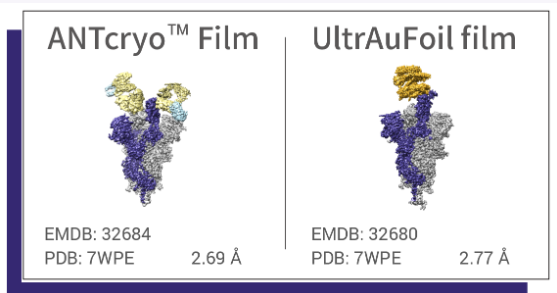
ANTcryo™ and UltrAuFoil grids were used to reveal the Omicron mutant strain spike protein structure binding to the therapeutic antibody JMB2002 and receptor ACE2. The final resolutions achieved were 2.69 Å (using ANTcryo™) and 2.77 Å (using UltrAuFoil), demonstrating superior resolution performance.

2.69 ÅANTcryo™
2.77 ÅUltrAuFoil
2
2022

Comparative cryo-EM sample preparation of adrenergic receptors

Stanford University

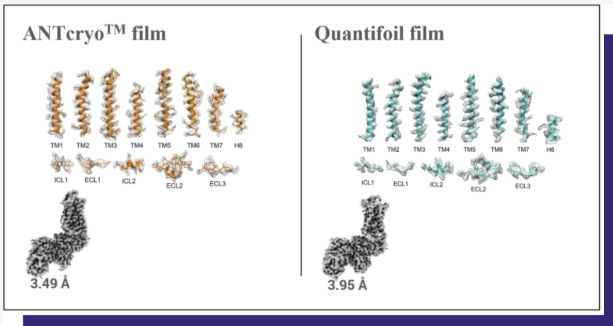
Comparative analysis using ANTcryo™ and Quantifoil grids for cryo-EM sample preparation. The study achieved resolutions of 2.49 Å with ANTcryo™ and 2.99 Å with Quantifoil, demonstrating superior performance of ANTcryo™ technology.

2.49 ÅANTcryo™
2.99 ÅQuantifoil
3
Cell2020

Activation and Signaling Mechanism Revealed by Cannabinoid Receptor-Gi Complex Structures

ShanghaiTech University · Liu ZJ et al.

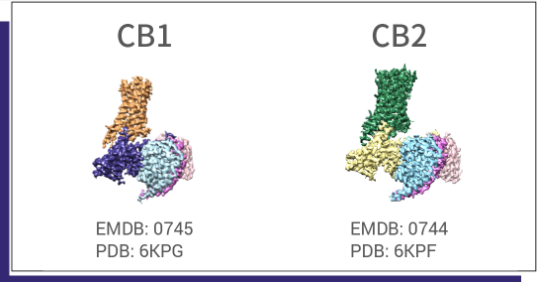
Analysis of three-dimensional cryo-EM structures of CB1 and CB2 bound to G protein molecules. The cryo-EM sample preparation used the ANTcryo™ grid (formerly CryoMatrix). Final resolutions achieved: 3.0 Å and 2.9 Å.

Selected Publications(from 100+ papers)

Cell6 papers

Cell2026GPCR

Structural decoding of reversible covalent linkage of odorants in human olfactory receptor OR6A2

Wang T, Liu ZJ et al. · ShanghaiTech University, iHuman Institute

The human olfactory receptor OR6A2 was successfully engineered into a functional protein for the first time, revealing its reversible covalent bond recognition mechanism for aldehyde odorants. A broadly conserved activation switch was discovered across Class II olfactory receptors.

S0092-8674(25)01430-8
Cell2025Virus

Early fusion intermediate of ACE2-using coronavirus spike acting as an antiviral target

Xing L, Lu L et al. · Fudan University

First high-resolution structure of the early fusion intermediate of coronavirus S protein, revealing the precise conformation of the fusion peptide inserted into the host membrane after S2′ cleavage. Identifies this intermediate as an optimal antiviral target window.

DOI pending
Cell2024Gene Editing

Structural Insights into the Diversity and DNA Cleavage Mechanism of Fanzor

Xu P, Saito M, Zhang F et al. · Broad Institute / MIT

Structures of 13 Fanzor proteins from 3 different organisms reveal the molecular diversity of eukaryotic gene-editing systems. The ωRNA binding interface is highly conserved, while TAM recognition and catalytic sites vary. The RuvC domain "Lid" loop undergoes conformational change upon guide-DNA pairing to regulate activation.

S0092-8674(24)00844-4
Cell2024Antibody

A potent pan-sarbecovirus neutralizing antibody resilient to epitope diversification

Rosen LE, Starr TN et al. (53 authors) · University of Utah / Vir Biotechnology

Discovery of human monoclonal antibody VIR-7229 with unprecedented cross-reactivity against all sarbecovirus clades, including non-ACE2 bat sarbecoviruses, while potently neutralizing all SARS-CoV-2 variants since 2019. VIR-7229 tolerates extreme epitope diversification via high-affinity binding, receptor molecular mimicry, and backbone interactions.

DOI: 10.1016/j.cell.2024.09.026
Cell2024Cilia/Flagella

Structure-guided discovery of protein and glycan components in native mastigonemes

Yan N, Yan C, Pan J et al. · Tsinghua University

First native structure of Chlamydomonas flagellar mastigonemes, revealing a complex assembly mediated by polysaccharides. Elucidates the molecular basis of ciliary motility and mechanosensation — the only cilia/flagella structural biology work in the collection.

DOI: 10.1016/j.cell.2024.03.005
Cell2020GPCR

Activation and Signaling Mechanism Revealed by Cannabinoid Receptor-Gi Complex Structures

Liu ZJ et al. · ShanghaiTech University

Three-dimensional cryo-EM structures of CB1 and CB2 bound to G protein molecules. Cryo-EM sample preparation used the ANTcryo™ grid. Final resolutions: 3.0 Å and 2.9 Å.

DOI: 10.1016/j.cell.2020.01.007

Science5 papers

Science2025Transposon

Mechanism of DNA targeting by human LINE-1

Jin W, Xu RM et al. · Institute of Biophysics, CAS

Reveals the DNA targeting mechanism of human LINE-1, the only autonomously active retrotransposon. ORF2p functions as a structure-dependent endonuclease, binding upstream dsDNA and recognizing downstream fork/flap structures, suggesting L1 transposition "piggybacks" on chromosomal processes with non-canonical DNA structures.

DOI: 10.1126/science.adu3433
Science2025COVERPhotosynthesis

Structure and function of a huge photosystem I–fucoxanthin chlorophyll supercomplex from a coccolithophore

Shen L, Wang W et al. · Institute of Botany, CAS

Coccolithophore PSI-fucoxanthin supercomplex at 2.79 Å resolution — 38 peripheral FCPI antennas, 819 pigment molecules, 95% quantum efficiency. Demonstrates ANTcryo™ capability for resolving ultra-large membrane protein complexes.

DOI: 10.1126/science.adv2132
Science2025Virus

Molecular basis of influenza ribonucleoprotein complex assembly and processive RNA synthesis

Peng R, Chang YW et al. · University of Pennsylvania

First revelation of influenza virus RNP as a right-handed antiparallel double helix with viral RNA wrapped in the minor groove. Visualized conformational changes of viral polymerase across functional states; nucleoprotein tail loop identified as a key drug target with candidate lead compounds.

DOI: 10.1126/science.adq7597
Science2022Virus

Structures of the Omicron Spike trimer with ACE2 and an anti-Omicron antibody

Xu H et al. · Shanghai Institute of Materia Medica, CAS

ANTcryo™ and UltrAuFoil grids were used to reveal the Omicron mutant strain spike protein structure binding to therapeutic antibody JMB2002 and receptor ACE2. Resolutions: 2.69 Å (ANTcryo™) vs 2.77 Å (UltrAuFoil).

  • ANTcryo™: 2.69 Å
  • UltrAuFoil: 2.77 Å
DOI: 10.1126/science.abn8863
Science2020GPCR

Structural basis of glucagon receptor signaling and drug action

Wu B et al. · Shanghai Institute of Materia Medica, CAS

Cryo-EM structures of the glucagon receptor in complex with Gs and various ligands, providing a structural framework for understanding class B GPCR activation and rational drug design.

DOI: 10.1126/science.aaz5346

PNAS1 paper

PNAS2024GPCR

Calcineurin-fused GPCRs enable high-resolution structural studies

Kobilka B et al. · Stanford University

A novel calcineurin-fusion strategy for GPCR structural biology, enabling high-resolution cryo-EM studies. Represents the first ANTcryo™ publication from a leading international structural biology lab.

DOI: 10.1073/pnas.2414544121

Cell Research1 paper

Cell Research2025GPCR

Molecular mechanism of the arrestin-biased agonism of neurotensin receptor 1 by an intracellular allosteric modulator

Sun D, Xu HE, Tian C et al. · University of Science and Technology of China

First high-resolution structure (2.65–2.88 Å) of a GPCR–β-arrestin1–biased allosteric modulator SBI-553 ternary complex. Discovered a novel "loop engagement" coupling mode — NTSR1 ICL3 binds the central crest cavity of β-arrestin1, representing a previously unobserved arrestin-selective GPCR conformation.

DOI: 10.1038/s41422-025-01095-7

Other Journals1 paper

Progress in Biophysics and Molecular Biology2020ANTcryo

Amorphous nickel-titanium alloy film: A novel support for cryo-electron microscopy

Huang F et al. · Institute of Biophysics, CAS

The foundational paper introducing the amorphous nickel-titanium alloy (ANTA) film as a revolutionary non-carbon support for cryo-EM. Demonstrated 18× lower protein adsorption, superior conductivity, and 2.36 Å resolution.

  • Protein adsorption: 0.94 pN vs 16.6 pN (carbon)
  • Resolution: 2.36 Å vs 2.59 Å (carbon)
  • Conductivity: 4 orders of magnitude better
DOI: 10.1016/j.pbiomolbio.2020.07.004

Data sourced from public ANTcryo™ user achievement records and verified against publisher databases. ANTcryo™ has supported dozens of high-impact publications — this list represents a curated selection.